Builders in the U.S. started work last month on the fewest number of new homes since August 1997 as a glut of unsold houses and the onset of colder weather discouraged new projects.
Housing starts slumped 14.3 percent to an annual pace of 1.408 million, less than forecast and down from December's 1.643 million rate, the Commerce Department said today in Washington. Building permits declined 2.8 percent to a 1.568 million pace.
Treasury yields fell after the figures showed residential construction will remain a drag on the economy until the inventory of unsold homes declines. Federal Reserve Chairman Ben S. Bernanke told lawmakers this week that the process may extend through much of the year.
``Housing inventories are still beyond bloated, and starts aren't going to recover in any meaningful way until those inventories come down,'' Chris Low, chief economist at FTN Financial, said before the report. ``I would be cautious about calling an end to the housing slump just yet.''
First -- this news while shocking, shouldn't be. Housing inventories have indeed been bloated for some time. Last month's increase took me by surprise, largely because of the massive amount of overbuilding. It looks like that's coming to an end.
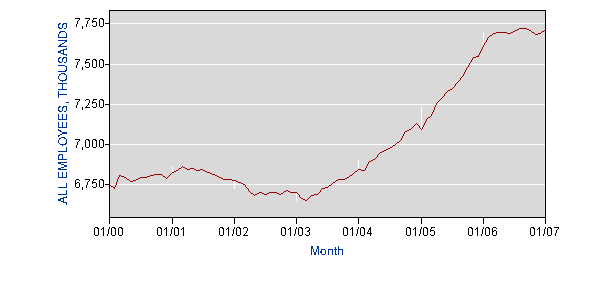
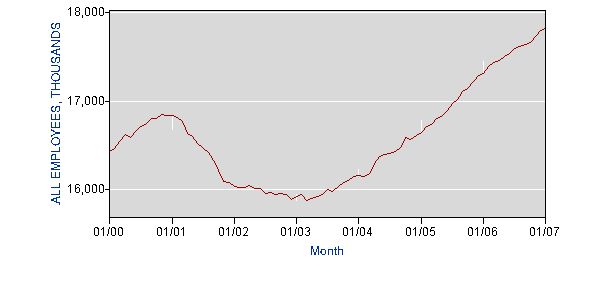
Going forward, this has some really important implications. The most important is construction employment. The blog Calculated Risk has been all over this and done a great job. The link is at the right on the blog roll. I would add two more job areas: professional services and financial services. Here's a chart of each of the preceding areas:
Construction:
Professional Services:
Financial Services:
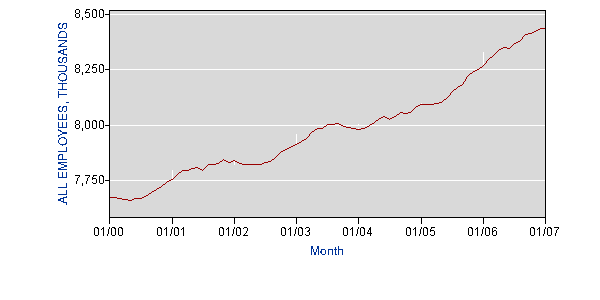
We've already started to see cracks in the sub-prime mortgage market. With fewer houses being built, there is less of a need for a sales and financing force. However, I wouldn't expect a big drop for at least a 3-6 months. This means we could start to get a very painful slow bleed in employment with construction lay-offs beginning, followed by a decreasing sales and financing force.

