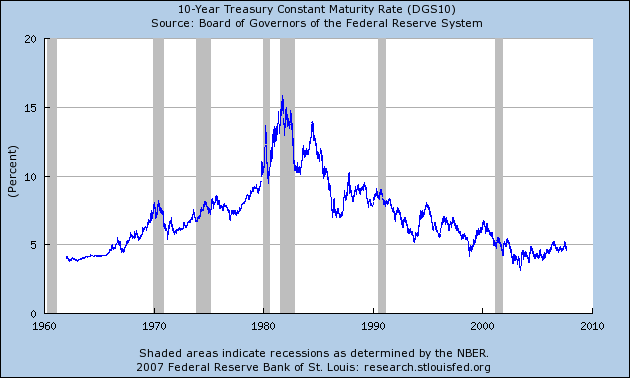
The 10-Year Constantly Maturing Treasury
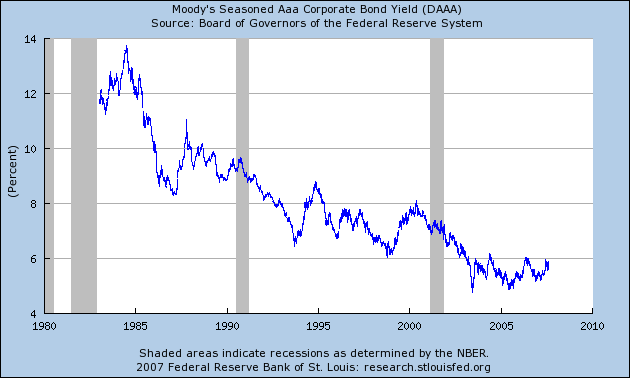
AAA Corporate Paper
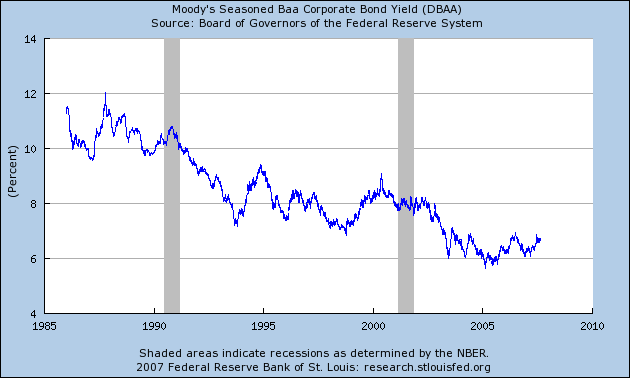
BBB Paper
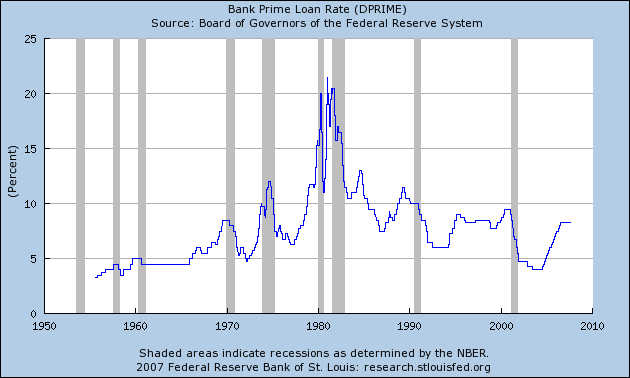
The Prime Rate
The Effective Fed Funds Rate
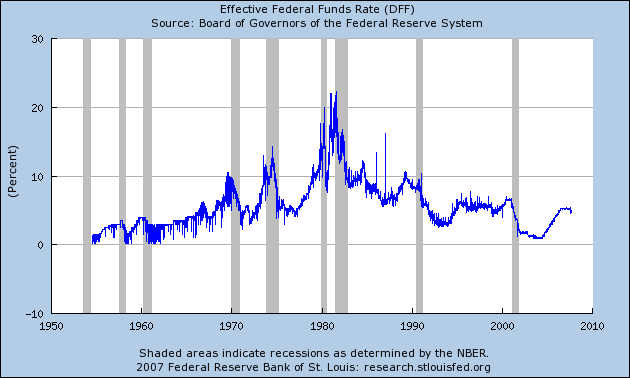
In addition, the short-term Treasury curve indicates that flooding the system with liquidity won't solve the problem. Just because someone has the money to lend from a liquidity injection does not mean they will use that money to make loans. Here's a chart of the short-term Treasury curve to illustrate that point.
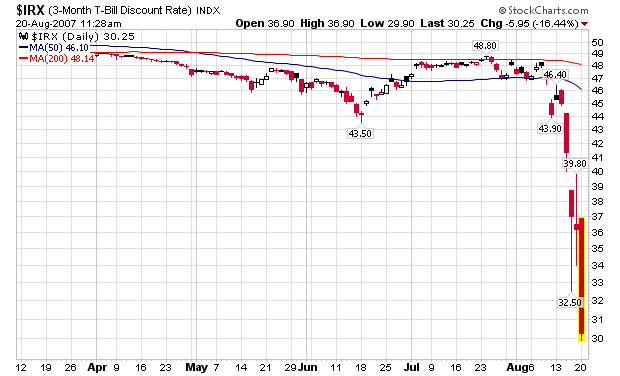
The bottom line is this is a liquidity issue -- people don't want to make loans right now.


2 comments:
Hi bonddad...
seems to me the dollar is in for a beating. Do you have an opinion on just how weak the dollar can get and, more importantly, the inflationary implications of a weak dollar and liquidity "injections?"
As you know, my view is a little contrary. I see the consume as needing ever-lower rates to refinance debt.
How would your argument have played out just prior to the 1990 or 2000 recessions?
In the late 1980s, the 10 year treasury varied between 8-9% with a 1986 low of 7%. It was at 8% when we entered the 1990 recession.
The 10 year treasury spent most of the 1990s between 5.5-8%, with a 1998 low of 4.2%. It was at 6% when the 2000 recession began.
In 2003 its low was 3.1%. It is now at about 4.75%.
Post a Comment