The crisis that began as a made-in-America subprime lending problem and radiated across the world is now circling back home, where it pummeled stock and credit markets on Monday.
While the Bush administration’s bailout package offers help to foreign banks, it seems to have done little to reassure investors, particularly in Europe, where banks are failing and countries are racing to stave off panicky withdrawals after first playing down the depth of the crisis.
Far from being the cure for the world’s ills, economists said, the rescue plan might end up being a stopgap for the United States alone. With Europe showing few signs of developing a coordinated response to the crisis, there is very little on the horizon to calm rattled investors.
The vertiginous drop in stock markets on both sides of the Atlantic on Monday reflected not only those fears, experts said, but also a growing belief that the crisis could tip the world into a global recession.
Ah yes -- the gift that keeps on giving: credit problems. Last week was extraordinary. Ireland the Germany moved to guarantee bank deposits. Several other European countries nationalized various banks. The bottom line is the problems are spreading.
Sometime over the last year or so the theory of "de-coupling" was advanced. This theory said that US problems would remain contained in the US. Well, that theory went out the window last week.
Let's take a look at some stock charts from around the world.
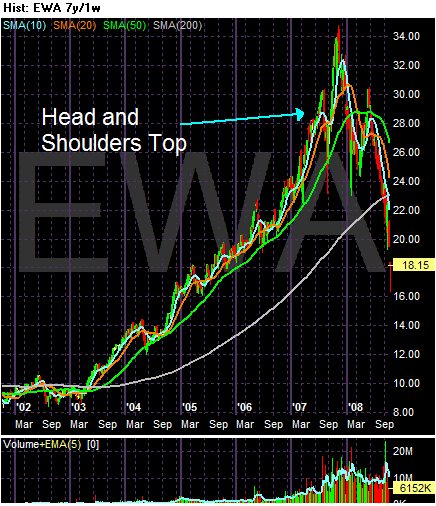
-- Australia formed a head and shoulders top from 2007 to 2008.
-- Prices are below the 200 day SMA.
-- The 10, 20 and 50 day SMA are all moving lower.
-- The 10 week SMA is now below the 200 week SMA
-- Prices have clearly broken below the uptrend stared in 2003.
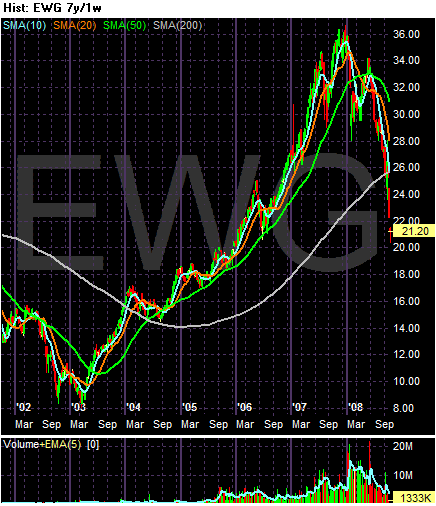
-- Germany also formed a head and shoulders pattern in 2007 and 2008.
-- Prices are below the 200 week SMA
-- The 10, 20 and 50 week SMA are all moving lower
-- The 10 week SMA is about to move through the 200 week SMA
-- Prices have clearly broken through the uptrend started in 2003
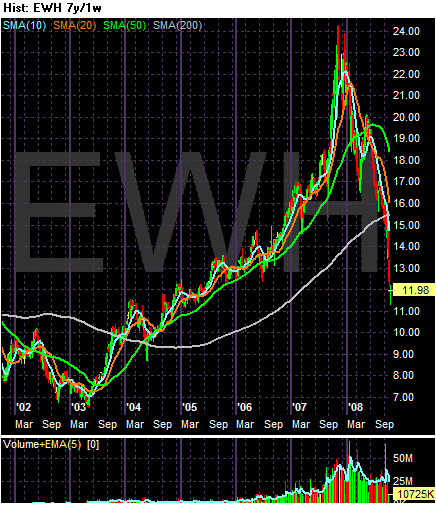
-- Hong Kong topped out in late 2007 and has been cliff diving since
-- Prices are below the 200 day SMA.
-- The 10, 20 and 50 day SMA are all moving lower.
-- The 10 week SMA is now below the 200 week SMA
-- Prices have clearly broken below the uptrend stared in 2003.
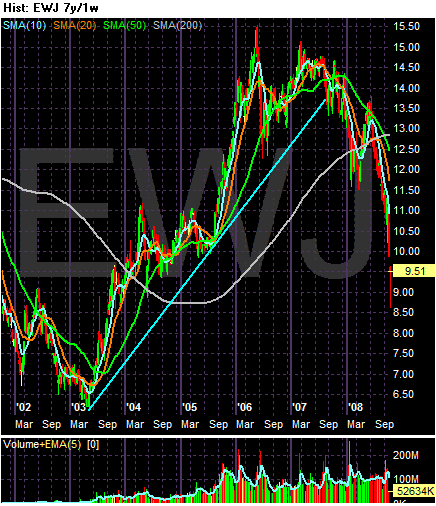
Japan is a mess. It has been falling for the last two years
-- Prices are below the 200 week SMA
-- The 10, 20 and 50 week SMA are all below the 200 week SMA
-- The 10, 20 and 50 week SMA are all moving lower
-- Prices broke the uptrend started in 2003
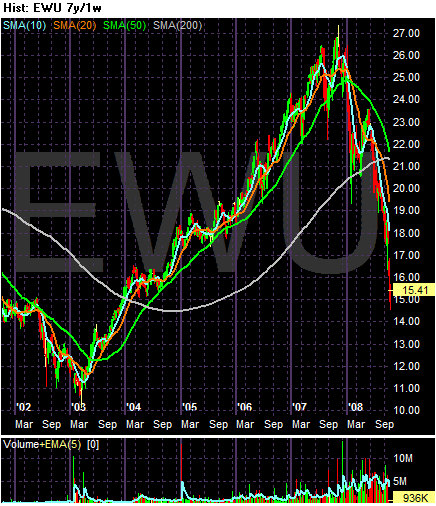
The UK market is clearly breaking down
-- Prices are below the 200 week SMA
-- The 10 and 20 week SMA have moved through the 200 week SMA
-- The 10, 20 and 50 week SMA are all moving lower
-- Prices have clearly broken the uptrend in 2003
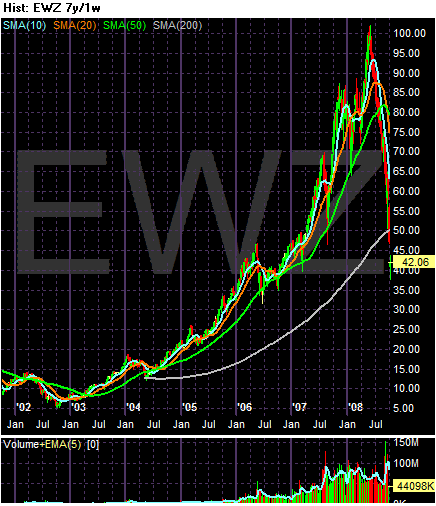
Brazil is a great example of the phrase "cliff-diving"
-- Prices are below the 200 week SMA
-- The 10, 20 and 50 week SMA are all moving lower
-- Prices have clearly broken the uptrend started in 2003.
Something else I will note with extreme caution: where is the news from Asia? We're heard a scant nothing from any Asian banks on this. Were they that much smarter then the rest of us? Or is there something else we should know?

